The Hum of the Place: Why We Started Recording Sound on Brand Photo Shoots
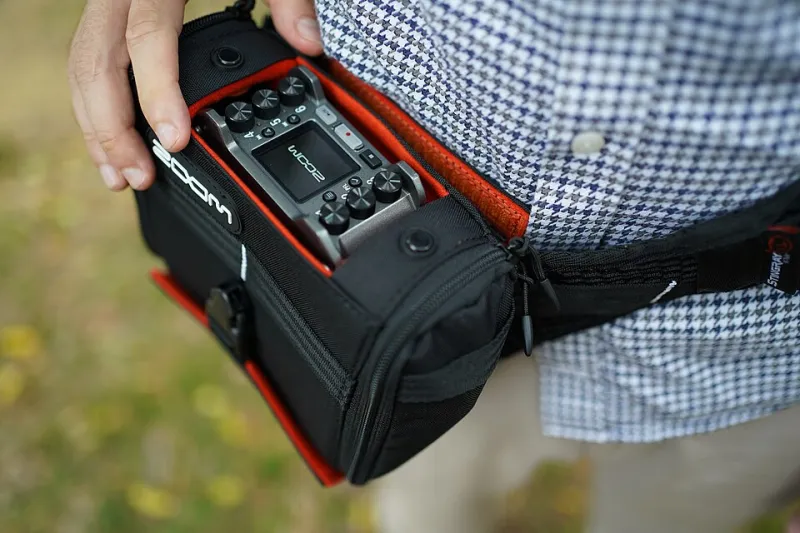
Photo: HerrOlli, CC BY-SA 4.0, via Wikimedia Commons
The first time we recorded a shop floor, it was an accident. We were on a two-day stills shoot for a family-run hardware shop in Sheffield, and the art director had asked for a few behind-the-scenes clips for social. Someone left a phone recording on a shelf while we moved lights. When we played it back that evening, the shop sounded alive. The trade counter bell. The rattle of a draw full of screws. A customer asking whether we had any galvanised hinges in the back. It was better than any of the polished voiceover we had planned.
That was the beginning of a small shift in how we work. We now record sound on brand photo shoots as a matter of course. Not because every campaign needs a podcast, but because stills are only half the texture of a place.
The Accidental Field Recording
The campaign was for a hardware shop that has been on the same Sheffield street since the 1950s. The brief was straightforward: show the people, the stock, the worn counter, the practical expertise. The kind of brand story that works best when it feels unforced. We spent the first morning shooting portraits of the staff and close-ups of the tools. Beautiful stills. But the room had a hum to it. Fluorescent lights. A radio in the back. The occasional clatter of something heavy being moved.
By lunchtime we had a Zoom H1n set up near the till and a Rode Wireless GO II clipped to the manager's apron. We asked him to talk us through a normal Tuesday. Not a scripted piece to camera. Just a voice note while he worked. What he said was gold: where the stock came from, which customers had been coming in for forty years, why the own-brand paint was better than the stuff in the big shed on the ring road.
What We Took and Why
The kit list was deliberately modest. A Zoom H1n with a deadcat for room tone and general atmos. A Rode Wireless GO II for voice notes and short interviews. A phone for backup and quick social clips. That is it. No boom operator, no sound recordist, no separate audio department. The whole setup fits in a camera bag.
The workflow is simple enough to run alongside a stills shoot without slowing it down. We record thirty seconds of room tone in every location. We clap once at the start of any voice note so we have a sync point. We name files by location and time. And we keep a paper log, because paper does not run out of battery.
Back at the studio, we sync the audio to the stills in Premiere Pro using the clap or the file timecode. From there we can cut short social edits, build a behind-the-scenes reel, or simply use the ambient bed under a carousel of images on the client's website. The voice notes become captions and pull quotes. The atmos becomes the thing that makes a fifteen-second reel feel like a place rather than a slideshow.
Why Sound Sells the Place
Brands spend a lot of money making sure their visuals are right. The right light, the right crop, the right colour grade. Then they publish those images in silence. That is a missed opportunity. Sound does something that a still image cannot: it gives a sense of scale and atmosphere. It tells you whether a place is busy or quiet, old or new, formal or familiar.
For the Sheffield hardware shop, the audio did something else. It made the staff sound like experts. You could hear the pause before an answer, the confidence in a recommendation, the easy banter with a regular. That is hard to fake in a caption. It is also exactly what the brand wanted to say.
The Practical Bits
If you are a photographer or a small studio thinking about adding sound, start small. Record room tone everywhere. Ask one person one question. Use the audio as a texture bed under stills rather than a standalone piece. Keep the files organised. And do not overthink the kit. A decent handheld recorder and a lapel mic will get you most of the way.
The bigger shift is editorial. Once you start listening, you notice things you would otherwise crop out. The bell above the door. The way someone says 'love' at the end of a sentence. The specific clatter of a shop that has been trading for seventy years. Those details are not clutter. They are the story.
We still shoot stills first. That is the job. But the hum of the place is now part of the brief. And on a drizzly Tuesday in Sheffield, that hum turned out to be the most persuasive thing we recorded all year.