Kettle Diplomacy: Two Days Filming a Brand Campaign on an Ordinary Terraced Street
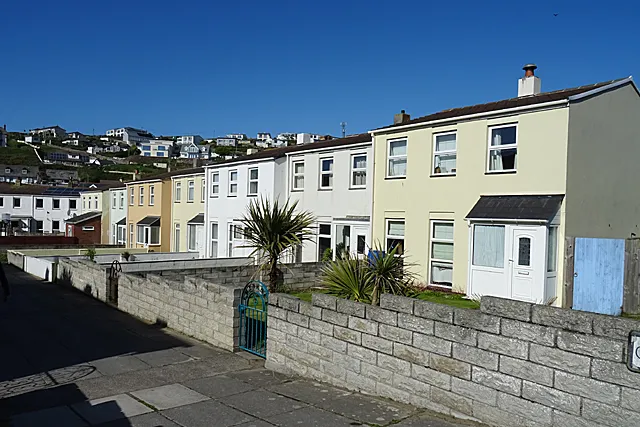
Photo: Anne Burgess , CC BY-SA 2.0, via Wikimedia Commons
The brief landed in February: a UK homeware brand, a new range, a national campaign, and a firm note from the client that they didn't want it shot in a studio. Fair enough. Studios are useful, honest and completely neutral, which was precisely the problem — the range was designed for small kitchens, and small kitchens don't exist against a backdrop.
So we found a street. Not a location house, not a stylist's show home. A genuine terraced street in a town in the North West: three houses in a row, all occupied, all with their own kettles and their own opinions about parking.
Why we didn't build the kitchen
We could have. A set build would have given us control over the light, the layout and the noise. It would also have given us a kitchen that no one in Britain has ever stood in — slightly too wide, suspiciously clean, with worktops at a helpful height.
The whole point of the range was that it fits where space is tight. If the kitchen in the advert is generous, the product story collapses. We needed the awkward corner. We needed the boiler cupboard nobody can open fully. We needed the back door that sticks in damp weather.
The paperwork nobody puts in the treatment
Residential shoots are ninety per cent logistics and ten per cent camera. Ours started with the council's film office, who were helpful and specific. A parking suspension for two bays, ten working days' notice, notices on lamp posts a week ahead. Public liability insurance sent across. A letter through every door on the terrace explaining who we were, what we were doing, and a mobile number for complaints.
Then we knocked on doors anyway. A letter is a courtesy; a conversation is a permission.
Kettle diplomacy
The first morning, we arrived at half six to find a man at number 14 already watching from behind his net curtains. By seven he'd been out to ask what was going on, and by half past he'd offered us his drive for the lighting van.
That set the tone for two days. We put a folding table at the end of the row with a kettle, a box of tea bags and a tin of biscuits, and it did more for the production than any piece of equipment we brought. Neighbours came out to chat. Somebody lent us a step ladder. A woman two doors down asked whether we'd mind waiting until her grandson had gone past on his bike because he'd been looking forward to it.
You cannot buy that goodwill, and you cannot fake it either. The street was lending us its ordinary life for two days, and everybody involved understood the trade.
What the street gave us that a studio never could
Real light through a bay window, for a start — that specific north-facing grey that makes a kitchen look lived in. The sound of a bin lorry somewhere behind the wall, which we kept in the mix. A dog barking at the exact right moment. The postman, entirely unbothered, walking through the back of a take.
Some of the best frames of the two days weren't designed at all. A teenager making toast in the background while our actor made coffee. A cat on the windowsill that refused to move for forty minutes and then became the hero of the shot. The neighbour's washing line visible over the fence, which made the whole thing feel like a place rather than a set.
We kept all of it. The client kept all of it.
What authenticity actually buys you
British audiences are unusually good at spotting fake domesticity. The too-large kitchen, the empty surfaces, the family who apparently own no shoes — people read it instantly, and the product stops feeling like something they could own.
Filming in a real house on a real street does something subtler. It signals that the brand has been somewhere. That the mugs have been in somebody's cupboard. For a range built around small spaces, that's worth more than any amount of polish.
If you're planning one: the short version
- Call the council's film office early. Parking suspensions, road closures and permissions all run on notice periods you can't compress.
- Post the letters a week ahead, then knock on every door. The knock is the part that counts.
- Ask about the school run, bin day and church times before you fix your call sheet.
- Book one house as a base and tell the crew where it is before they arrive.
- Bring your own kettle, mugs and biscuits. It is not a joke line. It is the cheapest goodwill you will ever buy.
- Insure properly, and carry the paperwork on you. Someone will ask.
- Leave slack in the day for the shot you didn't plan. On this job, several of those made the final cut.
- Say thank you in a way that lasts — a card through every door, and a contribution to something local if the disruption was real.
The campaign ran in the autumn. Nobody who sees it will know which street it was, or that the cat wasn't ours. But the kitchens are the size of kitchens, and the washing line is somebody's actual washing line. That's the whole argument, really.