The Butter Mark Is the Signature: Photographing the Recipes That Still Feed Us
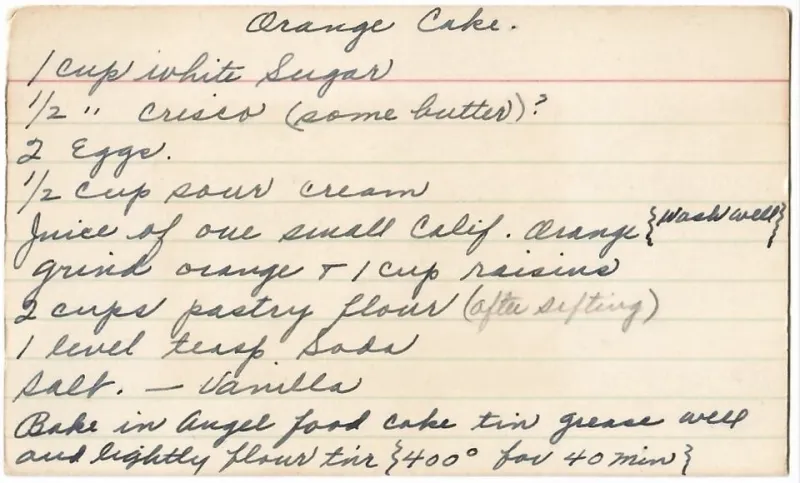
Photo: SJW, CC BY-SA 4.0, via Wikimedia Commons
The first card arrived in a sandwich bag. It was a lemon drizzle recipe, written in blue biro, with a butter mark near the sugar and a note in the margin that simply said: more lemon than you think. The family had brought it along to a portrait session almost as an afterthought. By the end of the morning, it was the thing we had photographed most carefully.
That card became the seed of a new Cottage Road Studios project. We are calling it a recipe-card portrait: part still life, part family documentary, part kitchen-table archaeology. The subject is not just the food. It is the handwriting, the splatters, the substitutions, the cookbook that falls open at the same page, and the hands that still know the recipe without reading it.
Why a recipe card behaves like a portrait
Most family portraits tell you what someone looked like on one day. A recipe card tells you how they worked. It shows where they pressed too hard on the pencil, which ingredients they crossed out, whether they trusted the oven or the clock. It carries the evidence of use: a ring from a mug, a smear of treacle, a corner turned down so often it has gone soft.
Those marks are not damage. They are the signature. When we photograph a recipe card, we are not trying to make it look new. We are trying to make it legible as an object with a life. The same goes for the cookbook with the broken spine and the page for Yorkshire puddings that has been annotated in three different pens. A clean photograph of a clean card would miss the point.
Setting up a tiny studio on the kitchen table
The practical side is less romantic than it sounds. We clear a small space near a window, tape down a piece of grey board and use whatever is to hand as a flag: a tea towel, a chopping board, a hardback cookbook. Raking light is the trick. If the light comes across the card at an angle, the dents in the paper and the ridges of old spills show up without turning the image into a forensic exercise.
We photograph the front and the back. We photograph the edges. We photograph the card next to the ingredient that made the stain, whether that is a block of butter, a lemon or a bag of dark brown sugar. A macro lens helps, but a phone with a decent close-up mode and a steady hand can do a surprising amount. The main rule is: do not tidy up first. Ask before you move anything. If the card lives in a shoebox with other cards, photograph it in the shoebox as well as on the board.
The cook-along: hands, not performance
Then comes the part that makes the project feel like a portrait rather than a product shot. We ask the family member to make the recipe as they normally would. Not a polished demonstration. Not a television performance. Just the usual Thursday afternoon business of getting something into the oven.
We photograph hands: cracking eggs, rubbing butter into flour, wiping a knife on the edge of the bowl, checking the underside of a cake with a skewer. We photograph the cuff with flour on it and the wooden spoon that has been in the drawer since before anyone can remember. We keep the kitchen in the frame, but we do not turn it into a styled set. A cluttered kitchen is often the truthful kitchen.
While they cook, we ask questions. Who wrote the card? What does moderate oven mean in this house? Why is there an asterisk next to the salt? What was the dish for? Sunday tea, birthday breakfast, the day after a funeral, a first attempt at feeding a new baby. The answers often end up in the final edit as short captions, because a recipe card without its story is just a piece of paper.
The difficult bits: grief, mess and permission
This work needs a gentle hand. Recipe cards often surface after someone has died, and the kitchen can become a room full of reminders. We do not rush. We do not rearrange the scene for a better composition without asking. We do not restore stains in the edit or make the handwriting look neater than it is. If a family wants a pristine digital copy for practical use, we make one, but we keep the documentary image separate.
There is also the question of what not to photograph. Private notes, phone numbers, reminders about medication, anything that belongs only to the family. The point is to preserve a food memory, not to publish a private archive. We agree beforehand what can be shared and what stays in the family album.
We have also learned to photograph the failures. A collapsed cake, a split sauce, a tray of biscuits that caught at the edges. Those images often get the biggest reaction, because they are the ones that sound like the person who made them.
What the family actually gets
A typical set is small: the card front and back, a close-up of the handwriting and the stains, the cookbook open at the relevant page, a handful of making shots, and one frame of the finished dish on the table where it would normally be eaten. Sometimes there is a portrait of the cook at the hob, but it is not the main event. The main event is the evidence of care.
Printed on matte paper, these images sit well in an album or a small framed group. They also work as a digital folder with good filenames and a short written note about who made the recipe and when. That sounds unglamorous, but future family historians will thank you for it.
The stain is the point
Since we started this project, we have photographed a treacle sponge recipe written on the back of a delivery note, a Be-Ro book held together with elastic bands, and a card for a cheese and onion pie that had been amended so many times it was almost a different recipe. None of them were valuable in the antiques sense. All of them were irreplaceable.
The families often say the same thing: they never thought anyone would want to photograph the card. But that is exactly why it matters. A posed portrait shows a family looking their best. A recipe card shows a family feeding itself. The butter mark is the signature. We just hold the light steady long enough to read it.