The Morning We Almost Left the Camera at Home: Seven Years at the School Gate
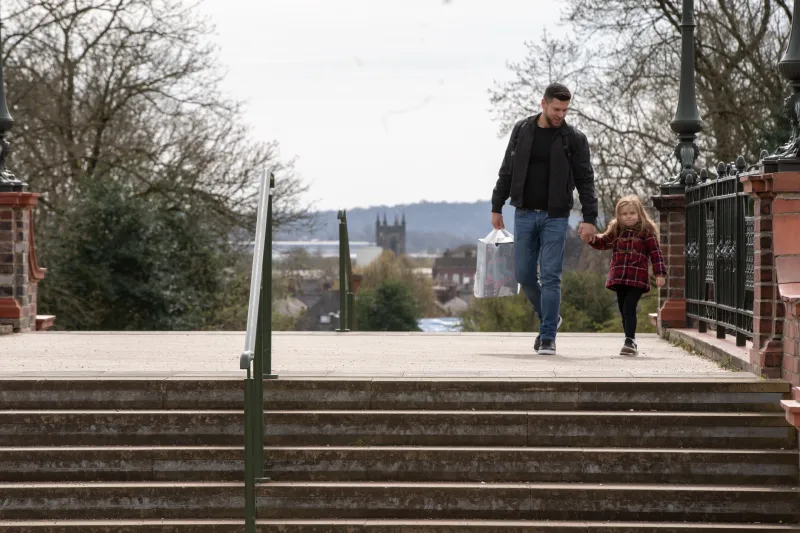
There is a particular kind of September morning that smells of new shoes and mild panic. The uniform is a size too big, the water bottle is already leaking, and someone is pretending not to cry at the gate. It is also the morning most families almost forget to photograph properly. At Cottage Road Studios, we have spent the past seven years turning that ordinary half-hour into a long-form portrait project: the same families, the same school gate, the first day of Reception and the last day of Year 6.
The brief that wasn’t a brief
The idea started as a favour. One family asked if we could quietly take a picture on their daughter’s first morning at primary school. Nothing staged. No backdrop. Just the gate, the coat, the slightly bewildered expression. Seven years later, we photographed the same daughter on her final morning of Year 6, taller than her mum and refusing to hold the same water bottle.
That pair of photographs did more than a formal family portrait ever could. The first frame is all anticipation and too-long sleeves. The last is all grown-up shoulders and a backpack that has seen things. Between them sits an entire childhood, or at least the part that happens between the lollipop lady and the classroom door.
We have since built a small, careful project around that idea. It is not a mass school-photography operation. It is a handful of families, a fixed spot, and a promise to turn up on two mornings that matter.
Permission before pictures
School gates are public-ish spaces, which is not the same as free-for-all spaces. Before we photograph anything, we speak to the school office and the safeguarding lead. We explain what we are doing, where we will stand, and how images will be used. We ask parents directly, in writing, and we never photograph a child who is not part of the project. If another pupil wanders into the background, we wait, reframe, or delete the frame.
The ethics are not complicated, but they are non-negotiable. No secret shots. No photographing a child in distress. No publishing images that identify a school, a uniform or a family without clear consent. We keep files securely, share proofs privately, and let families decide what leaves the archive. A school gate can feel like a public stage, but it is still a place where children are small and parents are vulnerable. The camera has to behave accordingly.
Same spot, different child
Consistency is the quiet magic of a project like this. We use the same gate, the same rough time, the same lens and a similar crop. We do not ask children to pose. We ask them to do what they would have done anyway: say goodbye, adjust a strap, ignore us completely. The repetition makes the changes visible. A coat that once swamped them now fits. A hand that gripped a parent’s sleeve now waves from the top of the steps.
It is not an exact science. Children grow at different rates, uniforms change, and the gate itself gets repainted. But the frame stays steady enough to act as a measuring stick. That is the difference between a snapshot and a record.
Weather is part of the record
September mornings can be bright and sharp or grey and drizzly. July leavers’ mornings can be humid, chaotic and full of helium balloons. We have photographed in both, and we have learned not to fight the weather. A clear umbrella, a hood pulled up, the shine of wet tarmac: these are not flaws in the picture. They are the texture of the day.
Practical kit is modest: a prime lens, a cloth for rain, a spare battery, and a willingness to stand under a tree. We arrive early, work quickly, and leave before the bell turns the gate into a crowd. The best frame is often the one made in the thirty seconds before everyone remembers the camera is there.
What the gate sees that the studio doesn’t
A formal family portrait can be beautiful and still slightly polished. The school gate portrait is not polished. It has scuffed shoes, a missing tooth, a parent trying to hold a bike, a younger sibling in a pushchair, and the particular chaos of a weekday morning. That is why it lasts.
When families look back at these pairs of photographs, they rarely talk about lighting. They talk about the coat, the friend they met at the gate, the smell of the classroom, the way Grandma always came on the first day. The image works as a key to memory, not just a picture of a face.
The archive you almost didn’t make
The best family archive is not built from the days we plan perfectly. It is built from the days we almost forget to record: the first morning, the last morning, the ordinary Tuesday in between. A seven-year school gate project does not need a grand production. It needs permission, consistency, a camera you actually bring, and the discipline to turn up when the morning is busy.
If you are standing at the gate this year with a child in a too-big blazer, take the picture. Not because it is a milestone, but because it is a morning. In seven years, that ordinary half-hour will look like the whole world.