Number 42, With Feeling: In Defence of the Doorstep Portrait
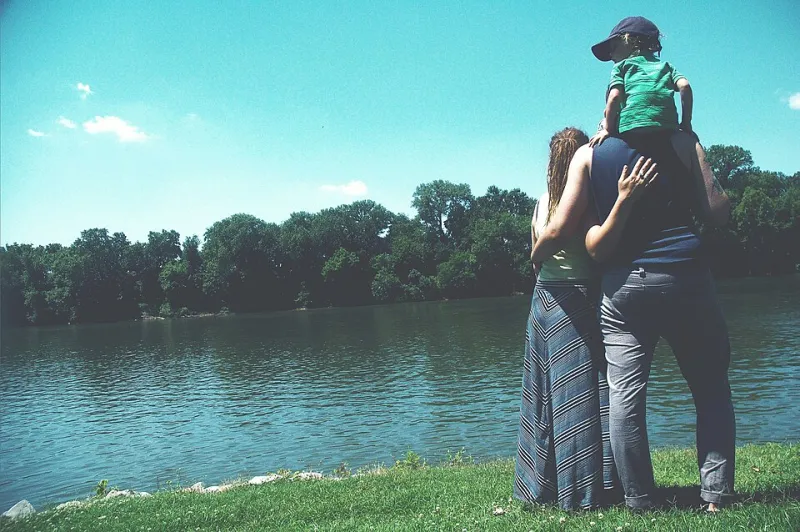
Photo: Andre Hunter dre0316, CC0, via Wikimedia Commons
There is a certain kind of family photograph that gets made in Britain most weekends of the year: a grey paper roll, a stool, a cheerful assistant, and a backdrop that could be in Croydon or Carlisle and nobody would ever know which. Studio portraits have their place. They are controlled, consistent and quick, and for a lot of families that is exactly what is wanted.
But they are also, by design, nowhere in particular.
A doorstep is somewhere. It is the exact spot where your post lands, where school bags get dropped, where you stand with the keys in your hand at the end of a long Tuesday. It is the most-used threshold in your life and, oddly, one of the least photographed properly.
The backdrop that already knows you
A seamless paper roll tells you nothing at all. Your front door tells you roughly when the house was built, what the last owners did to it, and whether your household is the sort that paints a door bright yellow or leaves it the colour it arrived in. It tells you if somebody in the family is a keen gardener, because there will be pots. It tells you how you feel about house numbers, which is a surprisingly revealing thing about a person.
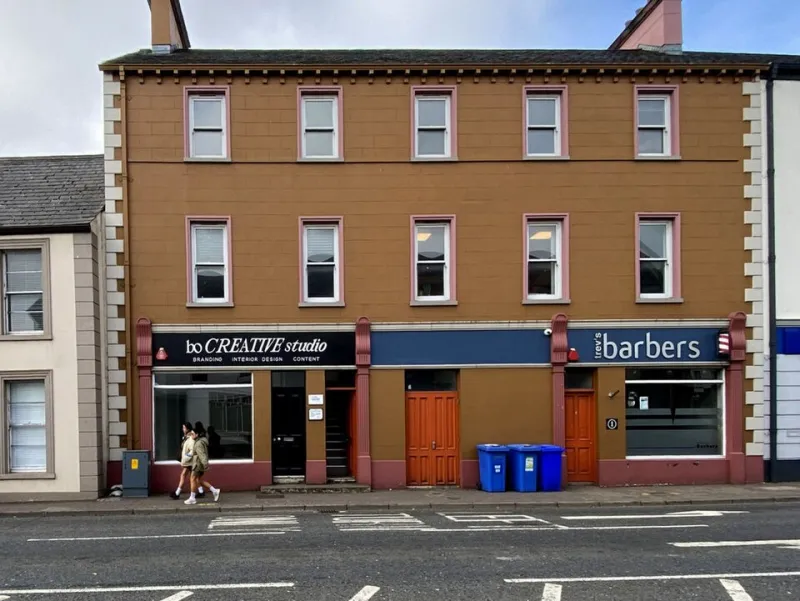
We have photographed families outside a 1930s bay-fronted semi in Leeds, a pebbledash ex-council house with a brand-new composite door, and a Victorian terrace where the tiled path still has a scrap of original mosaic by the gate. Every one of those pictures says something a backdrop physically cannot. Not because the architecture is grand — most of it is deeply ordinary — but because it is theirs.
Brick, paint and the archaeology of the house
There is a quiet joy in the details. London stock brick gone soft at the edges. Welsh slate. Yorkshire stone that holds the cold. Render that has been patched three times in three slightly different shades of cream because nobody could find the original tin.
Look closer still and you get the small archaeology: a brass letterbox polished by decades of hands, a doorbell that has not worked since about 2011, a house number screwed on slightly crooked, a hook where a hanging basket used to be. These are the things that will be unrecognisable in thirty years, and they are precisely the things that will make somebody stop and catch their breath.
A portrait against a plain backdrop taken this year could be swapped with one taken twenty years ago in a different house and nobody would notice. A doorstep portrait dates itself, and that is the entire point. The door gets repainted. The hedge becomes a different hedge. The photograph quietly turns into a document.
Light on your own doorstep
British front doors tend to fall into two camps, and knowing which one you have solves most of the technical problem before you start.
North-facing entrances give you soft, even, forgiving light for most of the day. It hides a hangover and flatters almost everyone. South-facing doors are glorious first thing and brutal at midday, so you shoot early, shoot late, or step back under the porch where the brickwork does the bouncing for you.
A porch, if you have one, is a softbox with a roof on it. Even a small one changes the quality of light dramatically. Overcast days are not a disaster either — in this country they are a gift, because a white sky is the largest diffuser ever made.
A few practical notes we repeat on almost every doorstep shoot:
- Open the door behind the family. A pale hallway bounces light back into faces and costs nothing.
- Watch for trees. Dappled shadow across a face looks charming in the viewfinder and chaotic on a print.
- Midday summer sun on a south-facing step is a fight you will not win. Come back at six.
- If the door is dark, put the lighter-wearing family members nearest the opening, not the other way around.
Framing: keep the number, lose the bin
Start square-on for the photograph that grandparents will put on the mantelpiece. Then move three-quarters so you can see a little of the street and the family stops looking like they are posing for a passport.
Get low. Kneeling height makes the step read as a step rather than a grey strip at the bottom of the frame, and it puts children closer to the adults' eyeline instead of stranded somewhere near their knees.
Keep the house number in shot. It costs nothing now and it will matter enormously later.
And yes, move the wheelie bin. Move the recycling boxes and the car if it is in the way. But do not tidy the whole street — the slightly worn step and the scuffed paint are the story. You are editing out distraction, not character.
Standing on your own doorstep is odd for about ninety seconds
Nobody knows what to do with their hands when they are two feet from their own front door. It is too familiar to feel like a photo opportunity and too strange to feel normal.
The trick is to give people a job they already do. Keys in hand, as if they have just got back. A mug. A dog on a lead. A child who has been told to put their shoes on and has not. Ask someone to sit on the step, because shoulders drop about an inch the moment a person sits down.
Take the boring frame first and take it fast. Then put the camera down and talk for two minutes. The photographs you actually want tend to arrive somewhere around minute four, once everyone has stopped performing and started bickering gently about whose turn it is to lock up.
Shoot through the doorway from inside the hall. Shoot the moment someone leans on the frame. Shoot the dog refusing to cooperate. The in-between frames are rarely the ones people ask for, and almost always the ones they come back to.
The photograph you will still have
Backdrops are designed to disappear. That is their job — to remove context so the faces do the work. There is nothing wrong with that, and we still shoot plenty of clean, controlled portraits.
But when a family tells us they want something that feels like them, the answer is usually about four feet away, painted, slightly weathered, with a number screwed on crooked beside it. Stand them on the step. Let the house do half the work.