The Room Is Small. The Story Doesn't Have To Be
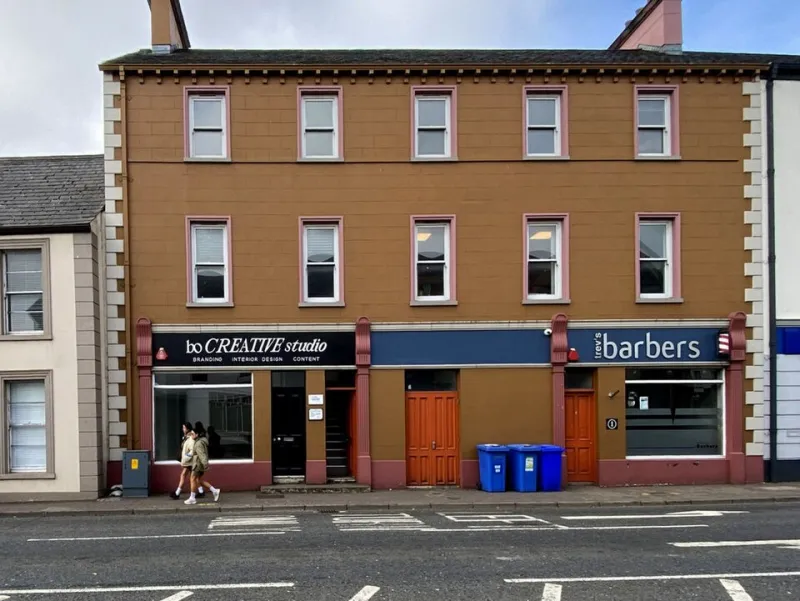
Photo: Kenneth Allen , CC BY-SA 2.0, via Wikimedia Commons
Here is an unpopular opinion for a creative studio: the perfect space does not exist, and chasing it is a waste of time. The UK is not a country of vast loft studios and sun-drenched California rooms. It is a country of Victorian terraces, 1930s semis, box rooms, narrow hallways, pebbledash, wheelie bins and skies the colour of a dishcloth. That is not a limitation. It is the raw material.
The myth of the perfect space
Brands wait for bigger budgets, open-plan studios and perfect light. Families wait to finish the kitchen, clear the clutter or move house. The Cottage Road approach starts with the room you have, not the room you wish you had. A small space forces decisions. You cannot hide behind a wide lens and a lot of furniture. You choose one window, one chair, one gesture. Intimacy becomes the visual language, and intimacy is usually more memorable than polish.
What a narrow hallway can do
A hallway is a frame. A doorway is a crop. A kitchen table is a stage. We have photographed a child in a two-up-two-down in Bradford where the tightness made the image feel like a memory rather than a campaign. For brands, a modest street can be more convincing than a fake luxury set. A corner shop, a bus stop, a front step — these are textures audiences recognise. The Cottage Road approach treats them as assets, not embarrassments. The room does not need to be impressive. It needs to be true.
Constraint is a creative director
Limited space means limited options, which means clearer decisions. We use available light, one lens and a short shot list. If you have a box room, shoot the detail: hands, shoes, a cup, the edge of a curtain. If you have a narrow hall, use the vanishing point. If you have a small garden, shoot low and let the fence become a backdrop. Constraint does not shrink the story. It sharpens it. The same is true for families: the best photographs often come from the smallest corner of the house because that is where people actually live.
Brands, families and the truth of a room
Brands often want aspirational. Audiences often want recognisable. A family in a cramped living room with laundry on the radiator is not a failure of styling; it is a truthful image. For family sessions, the small stuff is the story. For brands, modest spaces can signal authenticity without shouting. The key is not to pretend the room is something else. Work with it. Light it properly, frame it deliberately, and let the evidence of life do some of the storytelling.
A practical manifesto for small-space shoots
- Start with one window and build the shot around it.
- Clear only what distracts, not what tells the story.
- Use a 35mm or 50mm lens and get closer instead of wider.
- Put the camera at the height of the person you are photographing.
- Let people touch things; stillness is overrated.
- Embrace the street outside — pebbledash, terraces, corner shops and bus stops are visual texture.
- Stop apologising for the space before you have even used it.
The street outside counts too
Cottage Road is not an aesthetic of beige minimalism. It is a way of looking. The street outside counts. The bus timetable counts. The dog hair counts. In 2026 we photographed families in homes that would not pass a property brochure, and those sessions produced some of the most specific work in our diary. The same principle applies to brands: a real kitchen, a real workshop, a real front room can carry more meaning than a hired set with nothing at stake.
Stop apologising for the space
If you are a UK creative waiting for a bigger studio, a cleaner house or better weather, you may wait forever. Start where you are. The room is small. The story does not have to be.