The Half-Finished Jigsaw Rule: What Belongs in a Brand Photograph
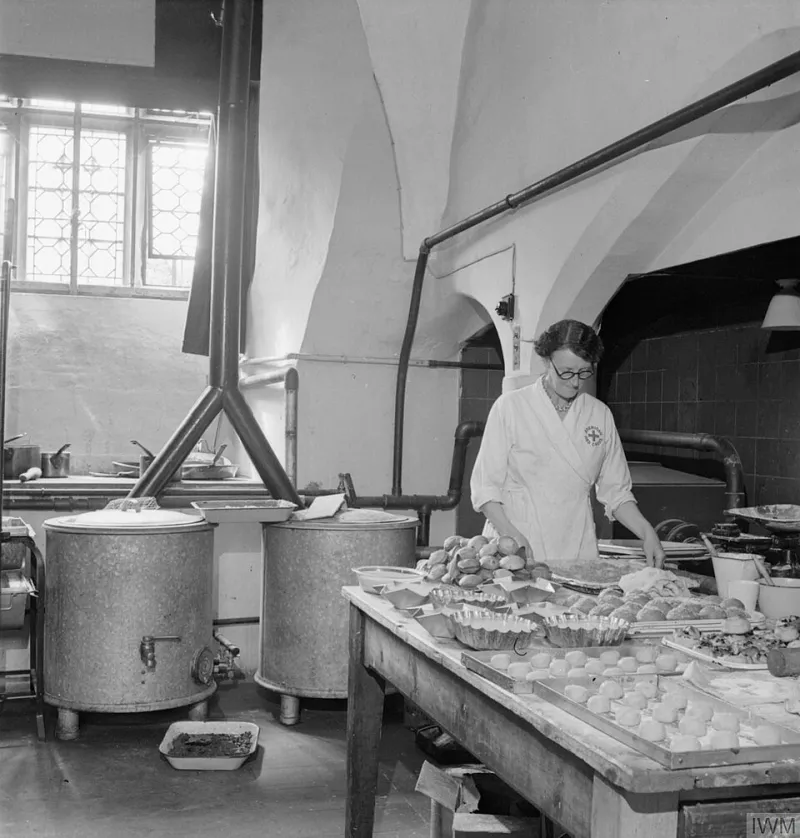
Photo: Ministry of Information Photo Division PhotographerSmith Jack, Public domain, via Wikimedia Commons
There is a moment on nearly every brand shoot when someone reaches for the washing-up bowl. It might be the client. It might be us. The bowl gets hidden behind the kettle, or carried out to the utility room, and the frame immediately looks cleaner. It also looks less like a home.
At Cottage Road Studios, we have started asking a different question. Not “is this tidy?” but “is this true?” That shift has changed the way we approach kitchen counters, front rooms, scuffed chairs and half-finished jigsaws. It has also made the photographs more useful to the brands we work with.
The showhome problem
Brand photography has a default setting: the showhome. Cushions plumped. Tea towel folded into a perfect triangle. No crumbs, no post, no washing-up bowl. The result can be beautiful, but it often feels like a room waiting for a photographer rather than a room where someone lives.
UK audiences are good at spotting a set. We know what a real kitchen looks like at 8am on a Tuesday. We know the tea towel over the radiator and the jigsaw that has been on the dining table since Sunday. Those details do not undermine a brand. They give it something to stand on. A scuffed chair leg says the place has been used. A washing-up bowl by the sink says someone was here, and someone will be back.
Keep, tidy, lose
When we are deciding what to do with an imperfect detail, we put it in one of three boxes.
Keep — the detail carries the story. A washing-up bowl, a tea towel, a half-finished jigsaw, a worn armchair, a chipped mug on the draining board. These are the things that make a room feel lived in. They are not props. They are evidence.
Tidy — the detail is a distraction rather than a story. Cables, bins, a pile of post, a competitor’s logo, a child’s school timetable with names on it. Tidy does not mean erase. It means move the detail out of the hero frame, or soften it, or shoot around it.
Lose — the detail creates a real problem. Confidential documents, sharp knives within reach of a child, a stained chopping board that would make a food brand look careless, a product that is damaged in a way that suggests poor quality. This is not about taste. It is about trust, safety and the promise the brand is making.
The test is not “would a stylist remove this?” The test is “what job is this detail doing?” If it is the first thing your eye lands on, tidy it. If it is the fifth, keep it. If it makes you want to explain it away, lose it. If it makes you believe the room, keep it.
Photographing the ordinary
Once you decide to keep something, the next job is not to make it look styled. A washing-up bowl arranged like a still life stops being evidence and becomes a prop. Leave it where it lives. Let it sit at the edge of the frame. Use the light that is already coming through the window. Get low, get close, and let the ordinary objects have their own scale.
We often shoot a simple sequence: a wide frame to show the room, a mid frame to show the activity, and a close frame to show the texture. The bowl might only appear in the wide frame. The tea towel might be the close frame. The jigsaw might be the mid frame, with a hand reaching in. That gives the edit options without turning the set into a display.
A useful rule: move one thing, not ten. If the bowl is blocking the product, move the bowl two inches. Do not clear the whole counter. The small adjustment keeps the room believable.
Do not fake the mess
There is a difference between an imperfect room and a manufactured one. Sprinkling flour on a worktop for a “real” food shoot is not the same as leaving the flour where it landed. Audiences can smell fake mess. It reads as another kind of styling.
If a detail is not already there, do not add it. If it is there, do not automatically remove it. That is the whole discipline. In 2026, with AI-generated images everywhere, the ordinary has become more valuable. A wonky shelf, a worn spoon, a washing-up bowl with a bit of history — these are proof of a real place. They are harder to fake than a perfect counter.
When to draw the line
Imperfection is not a free pass. A brand still has a promise to keep. A food brand can keep the worn spoon but should lose the stained board if it suggests poor hygiene. A family brand can keep the jigsaw but should lose the timetable with children’s names. A homeware brand can keep the scuffed chair but should lose the damaged product. Ask what the brand is promising. If the promise is “we are human”, keep the human details. If the promise is “we are precise”, tidy more. The mistake is tidying everything and then wondering why the pictures feel cold.
The bowl stays
The washing-up bowl is not the hero of the photograph. It is the evidence. The same goes for the tea towel, the scuffed chair and the half-finished jigsaw. They tell the viewer that the room has a history and the brand has a place in it.
So we will keep leaving the bowl in. We might move it two inches. We might shoot around it. But we will not pretend it was never there. The imperfect detail is often the most trustworthy thing in the frame.